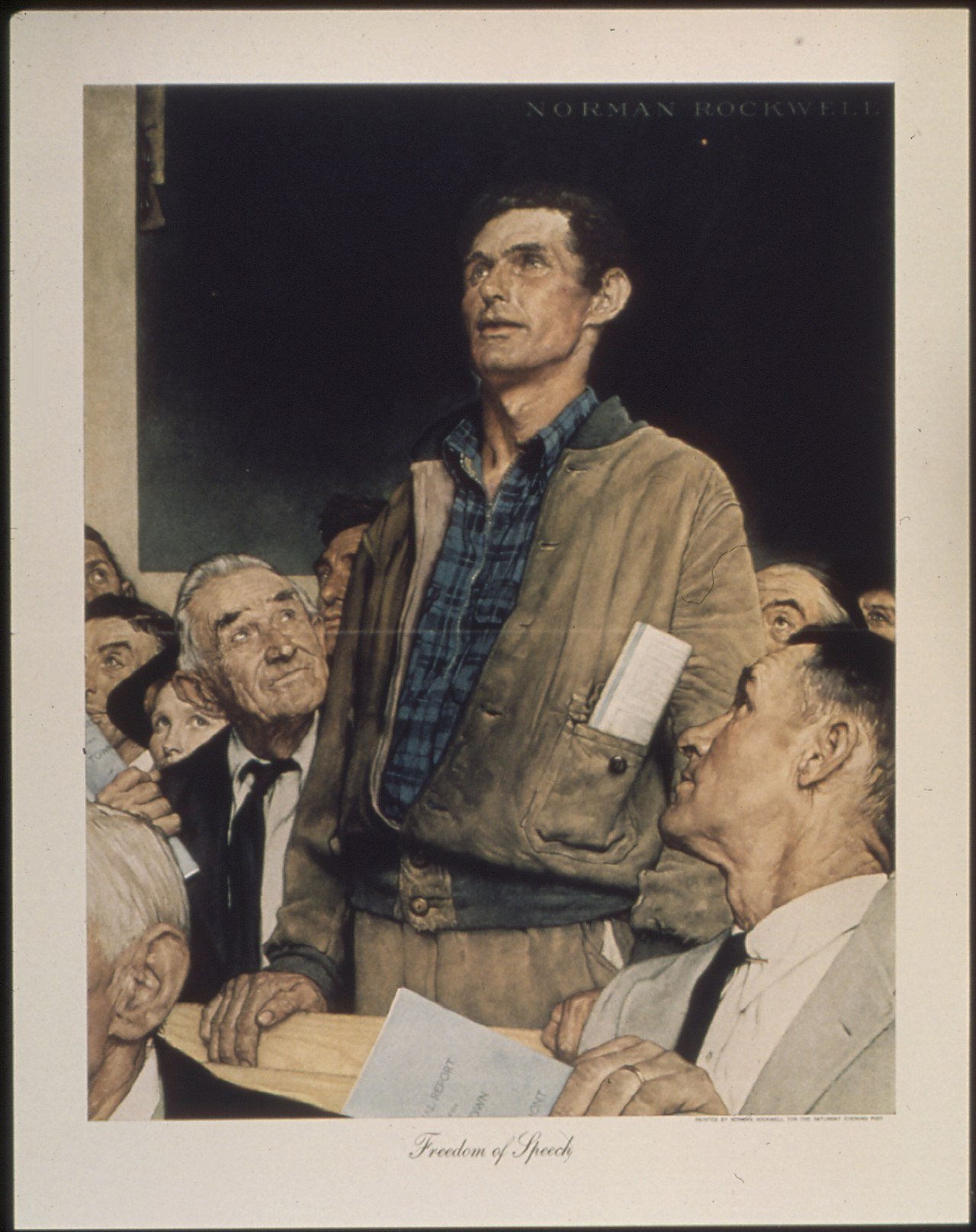
“Freedom of Speech” is still one of the most recognizable works in modern culture, resurfacing daily across Twitter threads, TikTok videos, Instagram carousels, and art blogs.
But Rockwell didn’t “go viral” by accident. His work was built for mass distribution. The Saturday Evening Post commissioned the work and distributed tens of thousands of copies. The U.S. Office of War Information printed posters and placed them in more than 400,000 retailers, ultimately raising over 132 million in war bonds. That same year, the Brooklyn Museum drew fewer than 500,000 annual visitors. The contrast is stark: commissioned platforms gave Rockwell the reach that galleries and museums could never match. He was making art for corporations and publishers, but that kept him paid, visible, and influential.
Animation faces a similar challenge today but, unlike illustration, animation is enormously expensive to produce. That’s why ambitious animated works have historically been underwritten by billionaires. Phil Knight bankrolls Laika. David Ellison funds Skydance. Steve Jobs kept Pixar alive through its earliest, riskiest years. Animation doesn’t have a clear model for mass distribution without that insurance policy. Though, with better software, that insurance policy becomes a lot cheaper.
I don’t know any billionaires, so I look to Rockwell. He showed that art can thrive (and even expand its influence!) when it works in tandem with larger systems of distribution. There are pathways forward: producing branded content for advertisers, partnering with streamers and distributors, even building consumer products around stories. Whatever it takes to make cool things. If we’re lucky, this will give us the chance to be independent and better in the future. Our challenge is clear: play the game, get paid, and still make good art.